
If you’ve been shopping for a MIG welder or researching aluminum welding techniques, you’ve probably seen “double pulse” listed as a premium feature. But is it actually worth caring about, or is it mostly marketing? This article breaks down what double pulse does, how it compares to single pulse and standard MIG, and whether it makes a real difference in weld quality, appearance, and heat management on aluminum.
Yes, double pulse matters for aluminum MIG welding — particularly for weld appearance, heat control, and reducing distortion on thin material. It mimics the stacked-dime look of TIG welding while maintaining MIG deposition speed. For production work or cosmetically sensitive aluminum parts, it offers a meaningful advantage over single pulse or standard spray transfer.
What Double Pulse Actually Does to the Arc
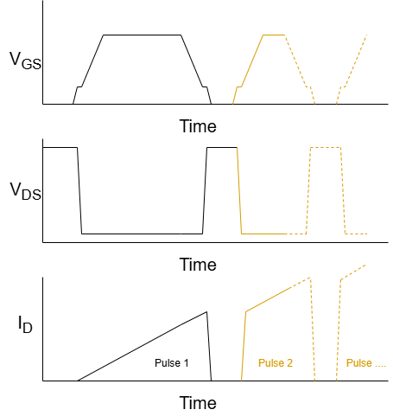
To understand double pulse, it helps to first understand single pulse MIG. In standard pulse MIG, the machine alternates between a high peak current and a lower background current at a set frequency. This controls droplet transfer, reduces spatter, and lowers overall heat input compared to conventional spray transfer.
Double pulse adds a second layer of modulation on top of that. The machine cycles the entire pulse envelope — peak and background — between a higher energy state and a lower energy state at a slower, secondary frequency. This creates a rhythmic variation in arc energy that produces the characteristic rippled bead pattern.
In practical terms, the arc is essentially “breathing.” It surges, then backs off, then surges again. Each surge deposits a small burst of filler metal and creates a slight pause in forward travel, resulting in the stacked, overlapping ripple pattern associated with TIG welding.
Why Aluminum Specifically Benefits from This
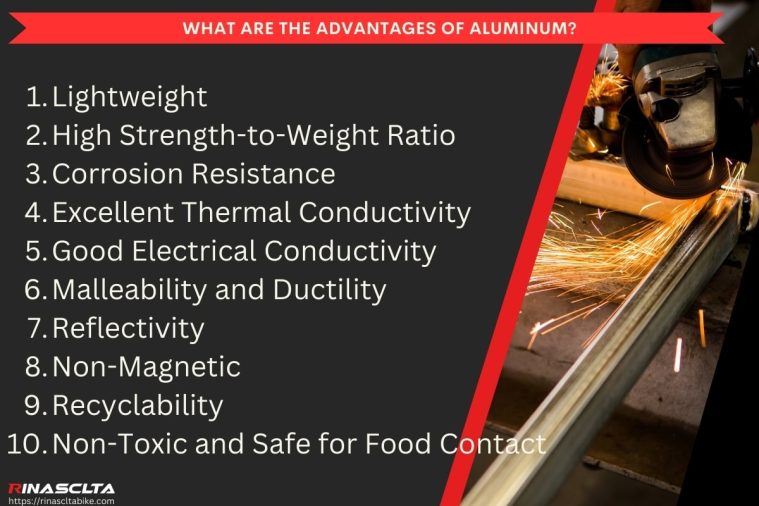
Aluminum is thermally conductive and has a low melting point relative to steel. It also has no color change before it melts, which makes it easy to overheat without visible warning. These properties make heat management critical.
Double pulse addresses several aluminum-specific challenges:
– Reduced heat buildup: The alternating low-energy phase allows the base metal to partially cool between arc surges, limiting cumulative heat input.
– Better fusion control: The pulsed energy variation helps achieve consistent penetration without burning through thin sections.
– Lower distortion: Less sustained heat means less warping on sheet aluminum, brackets, and extrusions.
– Improved bead appearance: The ripple pattern is aesthetically cleaner and more uniform than a standard MIG bead on aluminum.
For applications like automotive bodywork, marine fabrication, bicycle frames, or aerospace components — where both appearance and dimensional accuracy matter — these benefits are tangible.
Double Pulse vs. Single Pulse vs. Standard MIG on Aluminum
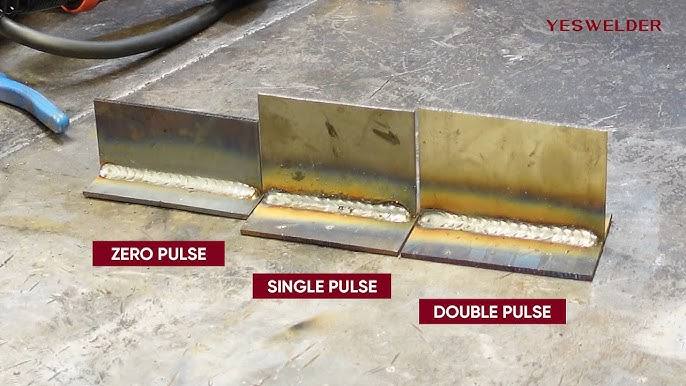
Understanding where double pulse fits requires comparing it directly against the other common transfer modes used on aluminum.
| Feature | Standard MIG (Spray) | Single Pulse MIG | Double Pulse MIG |
|---|---|---|---|
| Heat Input | High | Medium | Lower |
| Spatter | Moderate to High | Low | Very Low |
| Bead Appearance | Flat, rough | Smooth, consistent | Rippled, TIG-like |
| Distortion Risk | High | Moderate | Lower |
| Operator Skill Needed | Moderate | Moderate | Moderate to High |
| Wire Feed Stability | Simple | Good | Requires fine tuning |
| Best For | Thick aluminum, fast fill | General aluminum work | Thin/medium aluminum, cosmetic welds |
| Equipment Cost | Lower | Medium | Higher |
Single pulse is a solid choice for general aluminum MIG work. It reduces heat and spatter compared to spray transfer and produces a clean, consistent bead. Double pulse is the step up when appearance or heat sensitivity is the priority.
Standard spray transfer on aluminum is still used for thick plate and high-deposition work where cosmetics aren’t critical. It’s fast and simple but produces the most heat and the roughest bead profile.
When Double Pulse Makes the Most Difference
Double pulse isn’t universally necessary. Its advantages are most pronounced in specific situations.
Thin aluminum (1.5mm to 4mm): This is where double pulse earns its place. The reduced sustained heat input significantly lowers the risk of burn-through and warping. Single pulse can work, but double pulse gives more margin for error.
Cosmetically visible welds: If the weld will be seen — on a show car, a custom motorcycle frame, a piece of architectural aluminum — the stacked-dime appearance of double pulse is noticeably cleaner. Customers and inspectors notice the difference.
Out-of-position welding: The arc variation in double pulse helps manage the molten puddle in vertical or overhead positions, where controlling fluidity is harder.
Long weld runs on thin material: Cumulative heat buildup is a real problem on extended welds. Double pulse’s lower average heat input helps maintain consistent penetration and appearance from start to finish without the base metal getting progressively hotter.
Where Double Pulse Adds Less Value
Honest assessment matters here. Double pulse isn’t always the right tool.
On thick aluminum — say, 6mm and above — the heat management advantage shrinks. Thicker material can absorb more heat without distortion, and the priority shifts toward penetration and deposition rate. Single pulse or even spray transfer may be more practical.
Double pulse also requires more machine setup. Parameters like primary and secondary frequency, amplitude, and background current all interact. Getting a dialed-in result takes more time than setting up a single pulse weld. For quick tack work or simple structural welds where appearance isn’t critical, the extra setup time isn’t justified.
Wire feed stability is also more demanding. Double pulse amplifies any inconsistency in the wire feed system. A worn liner, a poorly fitted drive roll, or a kinked wire conduit will show up more noticeably in the bead. The machine rewards good technique and penalizes poor setup.
Key Settings That Determine Double Pulse Performance
Getting double pulse right on aluminum comes down to a handful of parameters. Most modern inverter-based MIG welders with double pulse capability — machines from Miller, Lincoln Electric, Fronius, ESAB, and others — allow direct control over these variables.
Primary frequency (pulse frequency): Controls the standard pulse rate. Typically set between 30–300 Hz depending on wire diameter and travel speed. Higher frequency produces a stiffer arc and finer ripple.
Secondary frequency (double pulse frequency): This is the rate at which the arc energy cycles between high and low states. Typically 0.5–5 Hz. Lower values produce wider, more pronounced ripples. Higher values tighten the pattern.
Amplitude (pulse depth): Controls how much the arc energy varies between the high and low states. Higher amplitude creates more dramatic rippling but increases the risk of inconsistent fusion if set too aggressively.
Background current: The lower current level during the low-energy phase. Setting it too low can cause arc instability or incomplete fusion. Setting it too high reduces the heat management benefit.
A practical starting point for 1.5mm–3mm aluminum with 0.9mm (0.035″) 4043 or 5356 wire:
– Secondary frequency: 1.5–2.5 Hz
– Amplitude: 30–40%
– Adjust primary pulse parameters to match wire diameter per manufacturer recommendations
Always run test beads on scrap material before committing to production work.
Common Mistakes When Using Double Pulse on Aluminum
Setting secondary frequency too high: This compresses the ripple pattern so tightly it loses the visual benefit and can cause inconsistent fusion. Keep it at a rate where each “pulse group” is visually distinct.
Ignoring wire feed quality: Double pulse exposes feeding problems. Before blaming the settings, check the liner, drive rolls (use U-groove for aluminum), and torch condition. Aluminum wire is soft and kinks easily.
Using the wrong shielding gas: Pure argon (100%) is standard for aluminum MIG. Mixed gases designed for steel will cause porosity and arc instability. This isn’t double pulse-specific, but it’s a common mistake that gets blamed on the pulse settings.
Traveling too fast: Double pulse works best at a controlled, consistent travel speed. Rushing the travel speed flattens the ripple pattern and reduces the heat management benefit. Let the arc do the work.
Expecting TIG quality from MIG: Double pulse produces a TIG-like appearance, but the metallurgical characteristics and fusion profile are still MIG. It’s a cosmetic and heat management improvement, not a process replacement.
FAQ
Is double pulse MIG welding the same as TIG welding aluminum?
No. Double pulse MIG produces a similar visual appearance to TIG — the stacked ripple pattern — but the process is fundamentally different. MIG uses a consumable wire electrode and shielding gas, while TIG uses a non-consumable tungsten electrode with separate filler rod. TIG generally offers more precise heat control and cleaner metallurgy, but double pulse MIG is significantly faster and easier to automate.
What wire is best for double pulse aluminum MIG welding?
Both 4043 and 5356 aluminum wire work with double pulse. 4043 flows more easily, produces a flatter bead, and is more forgiving on 6000-series alloys. 5356 is stronger and better suited for 5000-series base metals. For cosmetic applications, 4043 typically produces a slightly cleaner appearance. Wire diameter should match material thickness — 0.9mm (0.035″) for thin to medium aluminum, 1.2mm (0.047″) for heavier sections.
Can I use double pulse MIG on aluminum thinner than 1.5mm?
It’s possible but challenging. Below 1.5mm, even double pulse MIG struggles with heat management. Most experienced welders switch to TIG for material under 1.5mm. If MIG is required, use the smallest wire diameter available, maximize the pulse amplitude, and consider backing bars to absorb heat.
Does double pulse require a special welder or can any pulse MIG machine do it?
Double pulse requires a welder specifically designed with that capability. Not all pulse MIG machines include it. Check the machine’s specifications before purchasing. Brands like Miller (Auto-Set Elite, Multimatic series), Lincoln Electric (Power MIG 360MP), Fronius (TransPuls Synergic), and ESAB offer double pulse capability in their mid-to-upper range machines.
Does double pulse affect the strength of the aluminum weld?
When set correctly, double pulse does not reduce weld strength. The lower average heat input can actually improve mechanical properties in heat-sensitive alloys by reducing the heat-affected zone. However, improper settings — particularly too-low background current causing incomplete fusion — can create weak welds. Always verify fusion on test pieces before production.
Is double pulse worth the extra machine cost for a hobbyist?
For occasional hobby use on aluminum, probably not. The machines capable of double pulse typically start around $2,000–$3,500 USD. If you’re welding aluminum infrequently and appearance isn’t critical, a quality single pulse MIG welder will handle most tasks at lower cost. Double pulse justifies its cost in professional, production, or cosmetically demanding environments.
What’s the difference between double pulse and synergic MIG programs?
Synergic MIG refers to pre-programmed parameter relationships where adjusting wire feed speed automatically adjusts voltage, pulse frequency, and other settings. Double pulse is a specific arc transfer mode. Many modern welders combine both — a synergic program that includes double pulse settings optimized for specific wire types and diameters. They’re complementary features, not alternatives.
Final Thoughts
Double pulse genuinely matters for aluminum MIG welding when heat control, distortion, or weld appearance are priorities. It’s not a gimmick — the physics of the alternating arc energy produce real, measurable benefits on thin and medium aluminum. The stacked-dime look is a side effect of a process that’s actually doing useful thermal work. That said, it requires a capable machine, clean wire feeding, and proper setup to deliver those benefits. Match the tool to the job, and double pulse will earn its place in your process.


