
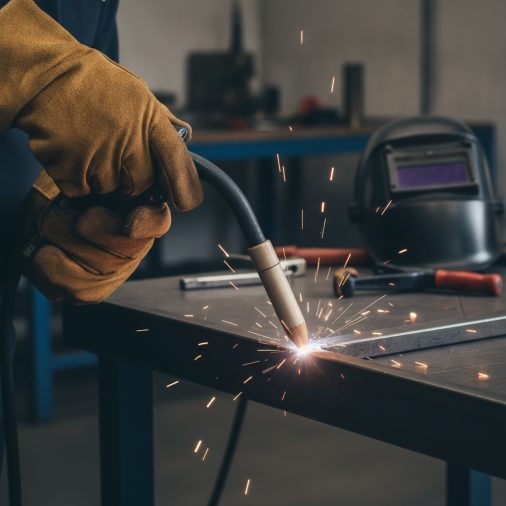
You’ve just set your wire speed and voltage, you’re holding the gun steady, but something about the bead looks off — too flat, too wide, not enough fusion. Torch angle is often the culprit, and the push angle is one of the most commonly misunderstood variables in MIG welding.
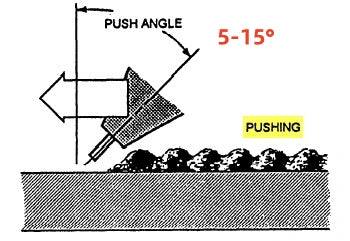
In MIG welding, a push angle means tilting the gun so the nozzle points in the direction of travel, pushing the arc ahead of the weld puddle. This technique typically produces a flatter, wider bead with shallower penetration and less spatter, making it a common choice for thinner materials and cleaner bead appearance on mild steel with solid wire and shielding gas.
Push Angle vs. Drag Angle: The Core Difference
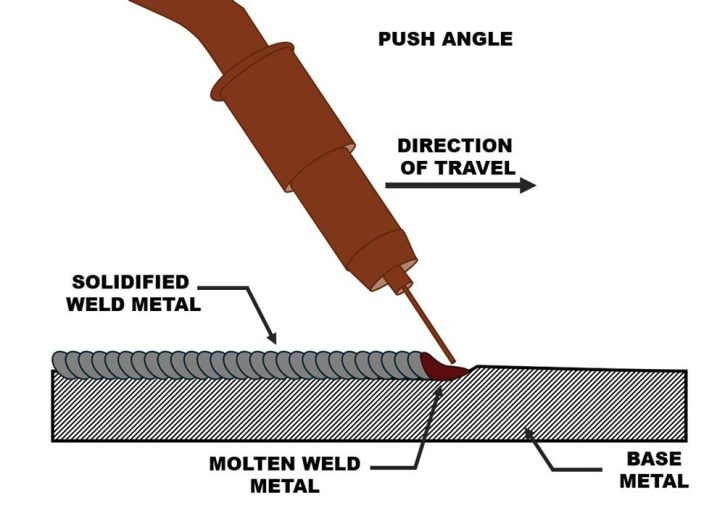
Understanding push angle is easier when you contrast it directly with the drag angle, also called the pull technique.
When you push, the gun handle tilts back and the nozzle points forward into the unwelded joint. The arc stays ahead of the puddle, which spreads heat more evenly across the surface and produces a shallower weld profile.
When you drag, the handle tilts forward and the nozzle points back toward the completed weld. The arc sits on or behind the puddle, which concentrates heat and drives deeper penetration into the base metal.
For a broader look at how these two directions compare in practice, the MIG push or pull technique breakdown covers the key trade-offs in detail.
Typical Push Angle Range
The push angle is usually between 5° and 15° from vertical, measured in the direction of travel. Some welders describe this as a 75°–85° work angle relative to the joint.
Staying within that range keeps the shielding gas coverage effective. Going beyond about 15°–20° starts to disturb the gas envelope, which can introduce porosity from atmospheric contamination.
The exact angle that works best depends on material thickness, joint type, welding position, and wire diameter. Treat any specific figure as a starting point and adjust based on what the puddle tells you.
What Push Angle Does to the Weld
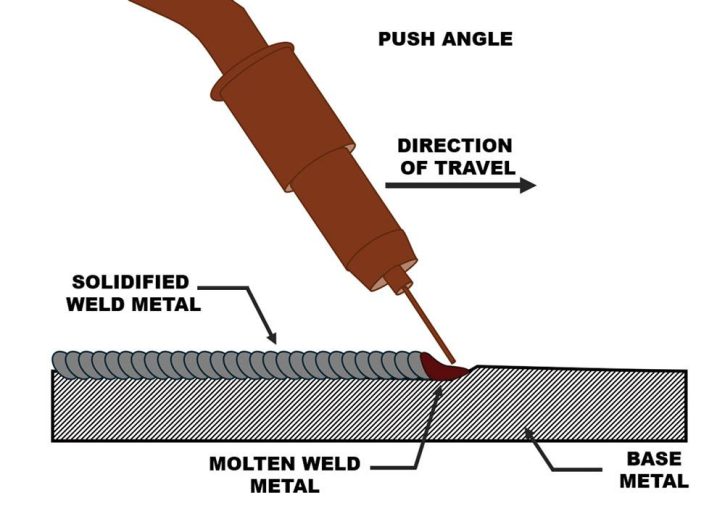
The arc direction has a direct effect on heat distribution and puddle behavior. Pushing the arc forward preheats the base metal slightly before the puddle arrives, which spreads the heat laterally rather than driving it downward.
The practical result is a wider, flatter bead with a smoother surface profile and less pronounced crown. Penetration is generally shallower compared to dragging, which can be an advantage on thinner sheet metal where burn-through is a risk.
Spatter levels also tend to be lower with a push angle when using solid MIG wire and a shielding gas mix, because the arc environment is slightly more stable and less turbulent.
When to Use a Push Angle
Push angle is generally the preferred technique for solid MIG wire with a shielding gas such as a CO₂/argon blend or pure argon on aluminum. It suits situations where bead appearance and surface quality matter.
Common applications include:
- Thin mild steel sheet where burn-through is a concern
- Aluminum MIG welding, where a push angle helps clear the oxide layer ahead of the puddle
- Horizontal fillet welds where a flat bead profile is acceptable
- Automotive bodywork and light fabrication where visual quality is important
- Overhead and vertical welds where controlling a large puddle is difficult
Aluminum deserves specific mention. Because aluminum forms a tenacious oxide layer with a much higher melting point than the base metal itself, pushing allows the arc to break up that oxide ahead of the puddle, which is one reason push is almost always recommended for aluminum MIG work.
When Push Angle Is Not the Right Choice
Deeper penetration is sometimes the priority — thick plate, T-joints requiring full fusion, or any joint where undersized penetration would compromise strength. In those cases, a drag angle typically performs better.
Flux-cored arc welding (FCAW) is another situation where the push technique is generally avoided. The flux in FCAW wire produces a slag that needs to stay behind the puddle so it doesn’t get trapped in the weld. Dragging the gun keeps the slag where it belongs. Gasless flux-core welding follows the same drag principle for this reason.
Work Angle and Travel Angle Together
Push or drag describes the travel angle — the tilt along the direction of welding. But the gun also has a work angle, which is the tilt perpendicular to the joint.
Both angles matter simultaneously. A correct push angle combined with a poor work angle can still produce uneven fusion or undercut on one side of a fillet weld. For a simple fillet weld, the work angle is commonly around 45° between the two base metal faces, though it shifts depending on joint geometry and position.
Keeping both angles consistent throughout the pass is one of the fundamentals that separates a clean, even bead from an erratic one.
Common Push Angle Mistakes
Even with the right technique in mind, a few errors come up regularly.
- Too much push angle: Going past roughly 15°–20° can pull the shielding gas away from the puddle. The result is porosity, a rough bead surface, and sometimes a grey or sooty weld appearance.
- Inconsistent angle: Drifting between push and drag mid-pass changes penetration and bead width unpredictably, producing an uneven profile.
- Confusing work angle with travel angle: Tilting sideways to compensate for a bad work angle while thinking you’re pushing correctly is a common beginner error that leads to one-sided fusion.
- Using push on flux-cored wire: This traps slag in the weld, causing inclusions that weaken the joint and complicate cleanup.
- Pushing too fast: Travel speed and torch angle work together. Pushing at an excessive travel speed can starve the joint of heat and produce a cold, poorly fused bead.
For a broader look at technique errors that affect bead quality, the most common MIG welding mistakes covers many of these issues alongside their fixes.
Puddle Visibility and Gun Angle
One practical advantage of the push technique is improved puddle visibility. Because the gun handle angles back and the nozzle points forward, your line of sight down the gun naturally looks toward the leading edge of the puddle and the unwelded joint ahead.
This makes it easier to track the joint accurately, especially on longer beads or joints with slight curves. If visibility is a recurring problem regardless of angle, factors like lens shade, arc brightness, and torch positioning are worth checking. Trouble seeing the weld puddle clearly is often a solvable setup issue rather than purely a technique problem.
Push Angle and Spatter
Spatter tends to be lower with a push angle when welding solid wire under shielding gas. The preheating effect of the leading arc stabilizes the puddle slightly, and the reduced turbulence produces fewer expelled droplets.
That said, spatter is driven by multiple variables — voltage, wire feed speed, contact-tip-to-work distance, and gas mixture all play significant roles. Adjusting only the torch angle won’t fix a spatter problem caused by incorrect machine settings. Reducing spatter in MIG welding usually requires looking at the full setup rather than any single variable.
Quick-Reference Comparison
| Feature | Push Angle | Drag Angle |
|---|---|---|
| Penetration | Shallower | Deeper |
| Bead width | Wider | Narrower |
| Bead crown | Flatter | More pronounced |
| Spatter (solid wire/gas) | Generally less | Generally more |
| Best for | Thin material, aluminum, clean appearance | Thick plate, deep fusion, FCAW |
| Flux-cored wire | Not recommended | Recommended |
| Puddle visibility | Better forward view | Puddle more obscured |
Safety Notes for Torch Angle Practice
Changing gun angles while welding can shift where spatter ejects, so check that your sleeves, gloves, and auto-darkening helmet are in good condition before practicing new angles. A reliable auto-darkening helmet — such as the Lincoln Electric Viking 3350 — helps you track the puddle clearly while staying protected as you adjust your technique.
Make sure your work area is clear of combustibles, ventilation is adequate, and your shielding gas cylinder is properly secured. MIG welding safety considerations are worth reviewing if you’re working in a new environment or changing your process setup.
Frequently Asked Questions
Does push angle always give less penetration than drag?
Generally yes, but the difference varies depending on material thickness, travel speed, voltage, and wire feed speed. On very thin material the difference may be negligible, while on thicker plate the penetration gap between push and drag becomes more significant. Machine settings have a larger total effect on penetration than torch angle alone.
Can you use a push angle for all welding positions?
Push angle can be used in flat, horizontal, vertical, and overhead positions, though the specific angle and technique adjustments differ by position. Vertical-up welding with a slight push is common for controlling a heavy puddle. The ideal travel angle still depends on the joint type, material, and what the puddle is doing.
Why is push angle recommended for aluminum MIG welding?
Aluminum forms a tough oxide layer with a melting point much higher than the base metal. Pushing the arc slightly ahead of the puddle helps the arc break up and clear that oxide before the molten metal arrives. Dragging on aluminum can allow the oxide to fold back into the puddle, causing inclusions and poor fusion.
What happens if the push angle is too steep?
Exceeding roughly 15°–20° from vertical can disrupt shielding gas coverage over the puddle. Atmospheric oxygen and nitrogen can contaminate the weld, causing porosity, a rough or porous bead surface, and reduced mechanical properties. The shielding gas column becomes less effective as the angle increases beyond this range.
Is push or drag better for reducing spatter?
For solid MIG wire with shielding gas, push typically produces less spatter because the arc environment is more stable. However, machine settings — particularly voltage relative to wire feed speed — have a much greater effect on spatter than torch angle. Correcting an incorrect voltage setting will reduce spatter more reliably than adjusting angle alone.
Does push angle affect contact-tip-to-work distance?
Indirectly, yes. As you increase the push angle, the physical distance between the contact tip and the base metal can increase if you don’t consciously maintain your standoff. A longer contact-tip-to-work distance increases electrical stickout, which can affect arc stability, bead profile, and penetration independent of the angle itself.
Getting Push Angle Right Takes Repetition
Push angle in MIG welding is a practical variable with real and measurable effects on bead shape, penetration, and spatter, but it works alongside machine settings, travel speed, and joint preparation rather than in isolation. Use it deliberately for solid wire and shielding gas applications, especially on thinner steel and aluminum, and save the drag technique for flux-cored wire and applications where deeper penetration matters. Keep the angle consistent throughout each pass, stay within a reasonable range to protect shielding gas coverage, and let the puddle confirm that your settings and angle are working together. Like most welding fundamentals, the technique becomes natural with focused practice on scrap before moving to production work.


