
Image source: Bing (Web (fair-use with source credit))
MIG welding is one of the most accessible welding processes out there. It's fast to learn, forgiving enough for beginners, and versatile enough for professionals. But "accessible" doesn't mean "safe by default," and that's where a lot of welders, especially those working in home garages, get into trouble.
The honest answer is yes, MIG welding carries real dangers. Some are immediate, like arc flash and electrical shock. Others build up silently over years of exposure. Understanding which risks apply to your situation is what lets you weld confidently rather than recklessly.
What Actually Makes MIG Welding Dangerous
MIG welding (technically called GMAW, Gas Metal Arc Welding) generates hazards across four main categories: fumes, radiation, electricity, and fire. None of them are theoretical.
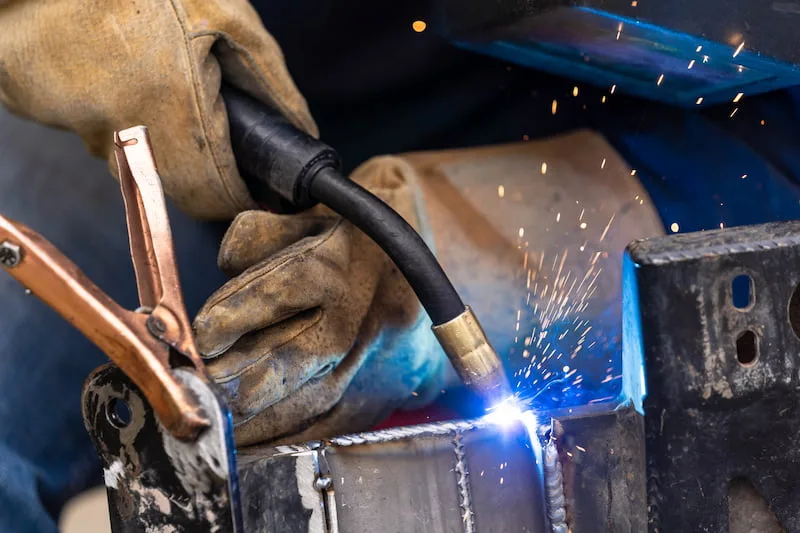
The electric arc reaches temperatures above 6,500°F. That vaporises the base metal and electrode wire, producing a cloud of microscopic metallic particles you can't see clearly and definitely don't want in your lungs. At the same time, the arc emits intense ultraviolet and infrared radiation, and the welding circuit carries enough current to cause ventricular fibrillation if it passes across your chest.
Spatter lands on anything nearby, and "anything" sometimes includes rags, cardboard, wood shavings, or a can of solvent someone left on the bench. Fire risk in a poorly organised workspace is genuine.
Not All MIG Welding Carries the Same Risk
This is where generic safety advice falls flat. The risk profile changes dramatically depending on what metal you're welding, where you're welding it, and for how long.
Mild steel is the baseline. The fumes contain primarily iron oxide and manganese, both harmful at sustained exposures but manageable with reasonable ventilation.
Stainless steel is a different situation entirely. Welding it produces hexavalent chromium (Cr(VI)), a confirmed human carcinogen. The International Agency for Research on Cancer reclassified welding fumes as a Group 1 carcinogen in 2017, largely driven by evidence from stainless steel welding. The exposure limits for Cr(VI) are extremely low, and general shop ventilation alone won't cut it.
Galvanised steel introduces zinc oxide fumes. The acute result is metal fume fever, a flu-like illness with chills, fever, and muscle aches that typically hits a few hours after exposure and clears within 24 to 48 hours. The problem is welders sometimes dismiss it as a one-off, keep working, and keep getting sick.
Aluminium MIG welding with pure argon shielding generates ozone at the arc. Ozone is a respiratory irritant and, at elevated concentrations in a confined space, becomes dangerous fast.
Welding Fumes: The Long Game and the Short Game
Short-term fume exposure produces acute effects. Metal fume fever from zinc oxide is the most common. Carbon monoxide can build up in a poorly ventilated indoor space and cause headaches, dizziness, and in serious cases, unconsciousness before you realise anything's wrong.
The long-term picture is where the real damage accumulates. Chronic manganese exposure can cause manganism, a neurological condition with symptoms resembling Parkinson's disease. It's irreversible. The ACGIH threshold limit value for respirable manganese sits at just 0.02 mg/m³, low enough that welding in a closed garage over time can push past it regularly.
Pulmonary fibrosis and lung cancer round out the long-term risk list for welders with sustained heavy exposure, particularly those welding stainless steel or working in confined spaces without proper controls.
The Exposure Numbers That Actually Matter
These are the regulatory and recommended limits for the key substances generated during MIG welding:
| Substance | OSHA PEL (8-hr TWA) | NIOSH REL / ACGIH TLV | Primary Health Effect |
|---|---|---|---|
| Welding fumes (general) | 5 mg/m³ | 1 mg/m³ (ACGIH TLV) | Respiratory disease |
| Manganese | 5 mg/m³ (ceiling) | 0.02 mg/m³ (ACGIH, respirable) | Manganism, neurological damage |
| Hexavalent chromium | 5 µg/m³ | 0.2 µg/m³ (NIOSH REL) | Lung cancer, nasal cancer |
| Zinc oxide fumes | 5 mg/m³ | 2 mg/m³ (ACGIH TLV) | Metal fume fever |
| Carbon monoxide | 50 ppm | 35 ppm (NIOSH REL) | CO poisoning |
| Ozone | 0.1 ppm | 0.05 ppm (NIOSH REL) | Respiratory irritation |
The gap between OSHA's legally enforceable limits and NIOSH/ACGIH's health-based recommendations is significant, particularly for manganese and hexavalent chromium. OSHA's limits lag behind current toxicological evidence in several areas. Use the ACGIH TLVs as your reference point when making safety decisions.
Respiratory Protection: What Actually Works and What Doesn't
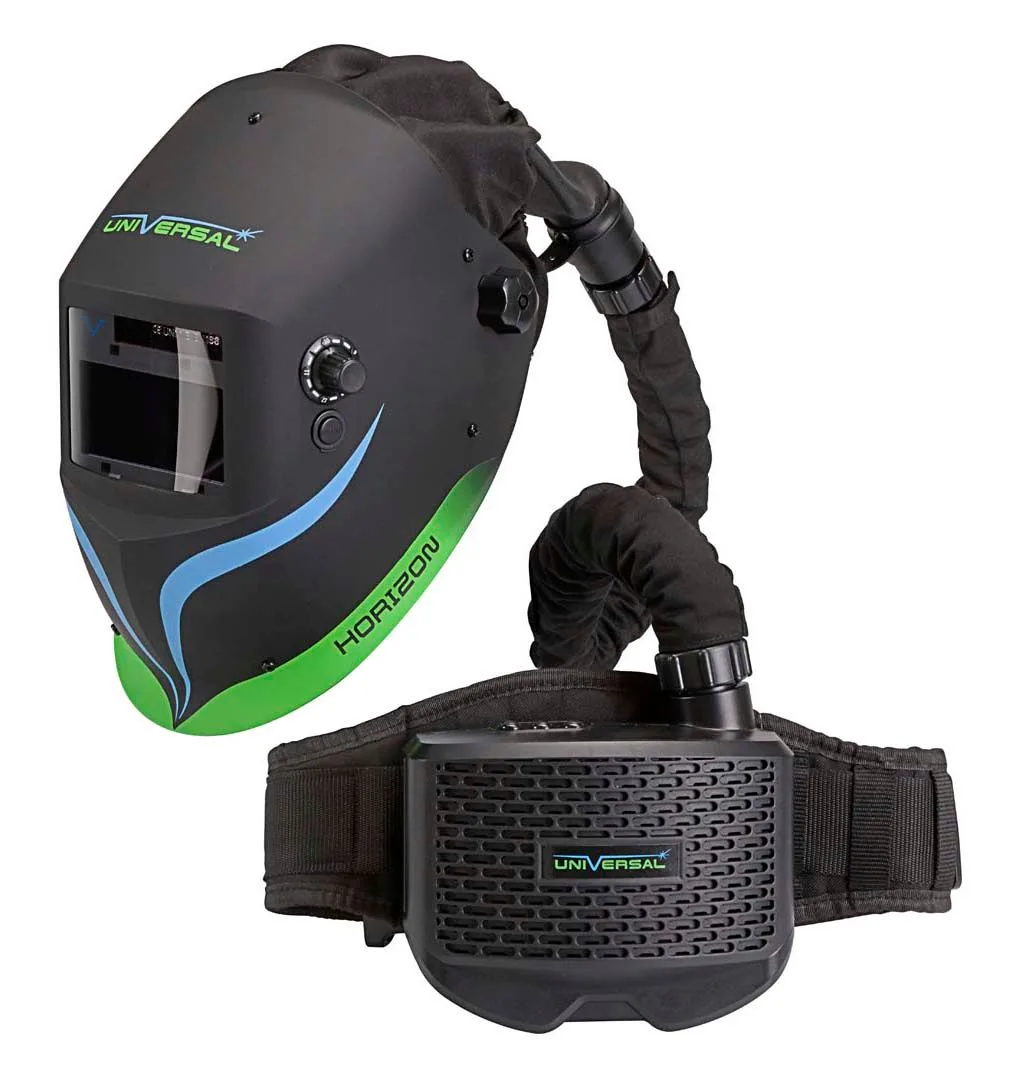
Image source: Bing (Web (fair-use with source credit))
A dust mask does nothing meaningful against metal fumes. The particle sizes are too small, and the fit is too poor. This is one of the most dangerous misconceptions in hobby welding, and it gives people a false sense of protection while they accumulate real exposure.
For general mild steel MIG welding with adequate ventilation, a half-face elastomeric respirator with a P100 particulate filter is a solid minimum. If you're welding stainless steel or galvanised metal, add an organic vapour cartridge to address gaseous co-contaminants.
A Powered Air-Purifying Respirator (PAPR) is the better choice for high-volume welding, confined spaces, or any situation where ventilation is compromised. It provides a higher Assigned Protection Factor (APF of 1000 versus 10 for a half-face), it's comfortable for extended wear, and it doesn't require the tight facial seal that makes standard respirators unreliable for bearded welders.
Fit testing under OSHA's Respiratory Protection Standard (29 CFR 1910.134) is mandatory for any tight-fitting respirator in a workplace setting. In a home garage, it's still worth doing properly.
Ventilation: The Single Biggest Variable in Your Exposure Level
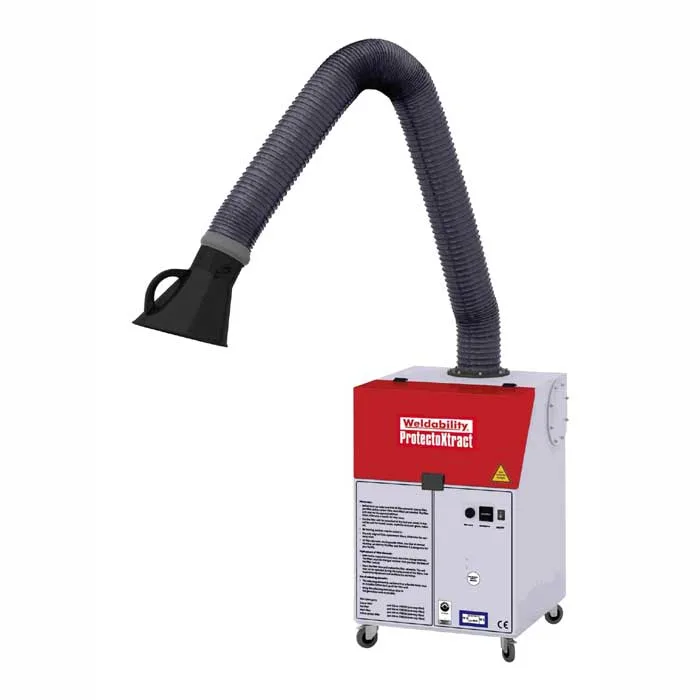
Image source: Bing (Web (fair-use with source credit))
Ventilation is the most powerful control you have over fume exposure, and the most commonly underestimated by home welders.
General dilution ventilation (opening a garage door and a window) helps, but it dilutes fumes across the whole space rather than capturing them at the source. For casual, short-duration mild steel welding it can be sufficient. For anything more intensive, it isn't.
Local Exhaust Ventilation (LEV) captures fumes at or near the arc before they reach your breathing zone. The capture point needs to be within roughly six to eight inches of the arc, positioned to draw fumes away from your face rather than across it. A misplaced LEV hood sitting 18 inches away on the wrong side is barely better than nothing.
Contact tip-to-work distance (CTWD) affects fume output in a way most beginners don't know about. A longer CTWD increases heat input and fume generation rate. Keeping your technique tight and your CTWD within the recommended range for your wire diameter meaningfully reduces fume output without requiring any additional equipment.
OSHA's general guideline for welding shops is a minimum of 2,000 CFM of airflow per welder. That's more ventilation than most home garages achieve through natural airflow alone.
Eye and Skin Protection That's Actually Rated for the Job
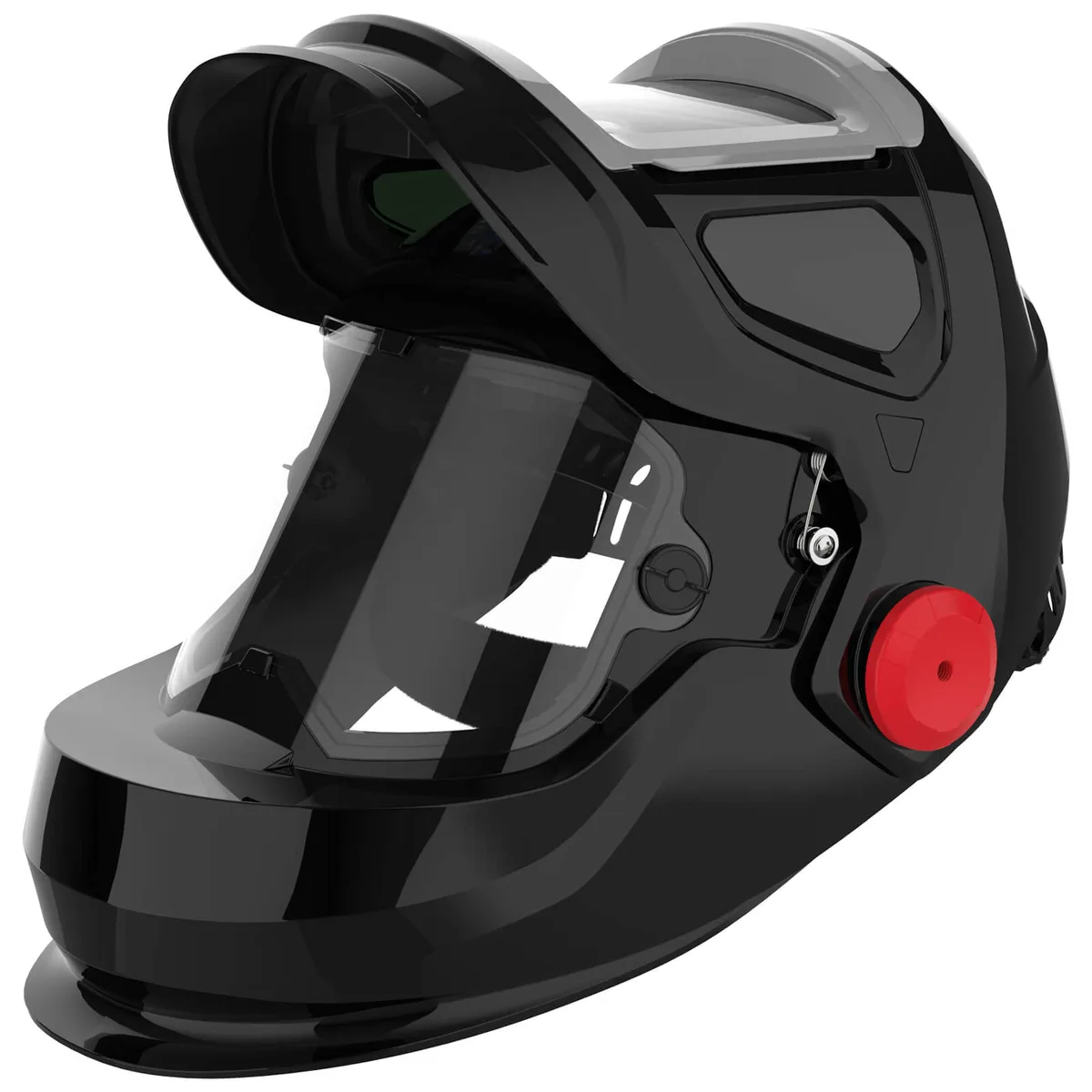
Image source: Bing (Web (fair-use with source credit))
Arc eye (photokeratitis) is UV-induced sunburn on your corneas. It's intensely painful, typically developing six to twelve hours after exposure, and it's completely avoidable with the right lens shade.
For MIG welding, the American Welding Society's ANSI Z49.1 standard recommends lens shade 10 at lower amperages, up to shade 13 for higher amperage work. Shade 11 covers most general MIG applications if you're unsure where to start.
Auto-darkening helmets are excellent when spec'd correctly. The numbers that matter are switching speed (1/25,000 second or faster), sensitivity range, and ANSI Z87.1 compliance. Cheap units with slow switching speeds can allow a brief UV flash before the lens fully darkens. That brief exposure, repeated across dozens of sessions, adds up.
UV radiation also burns exposed skin. A short-sleeve shirt is not appropriate welding attire. Leather welding gloves and a flame-resistant (FR) jacket protect against both spatter burns and UV exposure to the arms and torso.
Electrical Safety: Understanding the Real Shock Risk
MIG welders typically operate with an open-circuit voltage (OCV) between 14 and 45V DC. That sounds reassuringly low, but it's enough to cause serious injury under the wrong conditions.
Current across the chest causes ventricular fibrillation. As little as 100 to 200 milliamps passing through the heart can be fatal. Wet skin, wet gloves, or standing on a damp floor dramatically lowers the body's resistance and raises the risk at any voltage. Welding in wet or damp conditions without proper precautions is genuinely life-threatening.
Keep your body out of the welding circuit. Don't drape the welding cable across your shoulder or hold it against bare skin. Position the work clamp close to the weld to prevent stray current paths running through unintended sections of the workpiece.
In confined spaces, the risk compounds further because contact with the metal enclosure creates additional current paths through your body.
Fire and Explosion Safety Around the Welding Area
Welding spatter travels further than most people expect. Particles can land up to 35 feet from the arc and remain hot enough to ignite combustibles well after they've settled. A fire watch protocol, where someone monitors the area for at least 30 minutes after welding stops, exists because fires from spatter regularly start after the welder has left the area.
Gas cylinders deserve more respect than they typically get in hobby shops. A damaged regulator or a fallen cylinder with a sheared valve can become a projectile capable of penetrating concrete. Store cylinders upright, secured to a wall or cart, away from heat sources and electrical panels.
One hazard that doesn't get nearly enough attention: welding near chlorinated solvents. Residues from brake cleaner or similar products near the arc can be decomposed by UV radiation into phosgene gas. Even small amounts cause severe pulmonary damage. Clean the workpiece thoroughly and remove any chlorinated products from the welding area before the arc goes on.
NFPA 51B covers fire prevention during hot work, including minimum clearance distances and fire watch requirements. It's worth reading if you're establishing a permanent welding area.
Confined Space MIG Welding: A Category of Its Own
Welding inside tanks, vessels, ship compartments, or any enclosed structure raises every hazard simultaneously. Fumes accumulate with no natural dispersion. Shielding gas, particularly argon, can displace oxygen without any warning smell. Argon is colourless, odourless, and heavier than air, so it pools at floor level and you won't know the oxygen content has dropped until you're already impaired.
Electrical risk compounds in confined spaces because the metal enclosure itself becomes a grounded conductor surrounding the welder.
OSHA's Permit-Required Confined Space standard (29 CFR 1910.146) requires atmospheric testing before entry, continuous monitoring during work, a trained attendant stationed outside, and a rescue plan in place before anyone goes in. Confined space welding incidents produce fatalities regularly, often involving experienced workers on familiar jobs who skipped the atmospheric test because nothing had gone wrong before.
If you're a home fabricator who's crawled inside a tank or large enclosure to reach a weld, treat it as a confined space regardless of whether OSHA applies to your situation. The physics don't change based on who owns the building.
The Legal and Regulatory Framework You Should Know
For US workplaces, the core standards are OSHA 29 CFR 1910.252 (general industry welding), 29 CFR 1926.350 through 354 (construction), and the Hexavalent Chromium Standard at 29 CFR 1910.1026. That last one sets out specific exposure monitoring, medical surveillance, and hygiene requirements for anyone regularly welding stainless steel or chromium alloys.
In the UK, COSHH regulations govern welding fume exposure, and the HSE substantially tightened its guidance in 2019 following the IARC reclassification. The HSE's current position is clear: general ventilation alone is not adequate for most welding operations, and respiratory protection is required except when welding outdoors with a strong natural breeze moving fumes consistently away from the breathing zone.
The Safety Data Sheet for your welding wire is one of the most practical documents available to you. It identifies fume components for that specific wire on specific base metals, lists recommended exposure controls, and specifies required PPE. Electrode manufacturers including Lincoln Electric and ESAB publish these for every product in their range. Reading it before you weld a new material takes five minutes.
Home welders in the US aren't subject to OSHA enforcement in residential garages. But the manganese accumulates in your nervous system whether an inspector witnessed the exposure or not.
Practical Safety Setup for a Home Garage Welder
The gap between "I opened the garage door" and genuinely adequate protection is wider than most hobby welders realise. Cross-ventilation, where air moves through the space rather than pooling near a single opening, is what actually reduces fume concentration. One open door improves things. It's rarely enough on its own.
A practical minimum setup for a residential garage:
- Welding helmet meeting ANSI Z87.1, shade 10 to 13, with auto-darkening switching speed of 1/25,000 second or faster
- Flame-resistant (FR) cotton or leather jacket, leather welding gloves, leather boots
- Half-face elastomeric respirator with P100 filters for mild steel, upgraded to OV/P100 combination cartridges for painted or coated metals
- PAPR for stainless steel, galvanised steel, or any extended sessions in a small enclosed space
- Cross-ventilation from at least two openings positioned to move air across the welding area
- A bench-mounted or portable fume extractor with the capture point within six to eight inches of the arc
- A 35-foot cleared radius around the arc, or fire-resistant barriers where full clearance isn't possible
- A Class B fire extinguisher within arm's reach
- Dry insulating footwear and dry gloves at all times
The pre-weld inspection matters as much as the PPE list. Identify the base metal and any coatings before striking an arc. If the metal is painted, plated, or unknown, treat it as potentially hazardous and protect accordingly. A wire brush and solvent wipe of the weld zone removes surface contamination and reduces fume output, provided the solvent is fully evaporated before the arc goes on, and is not chlorinated.
When MIG Welding Risk Becomes Unacceptable Without Professional Controls
Some welding work genuinely exceeds what a home setup can safely handle. Recognising that boundary matters.
Sustained stainless steel welding is the clearest example. Hexavalent chromium exposure limits are low enough that controlling them reliably requires air monitoring, engineered LEV systems, and often supplied-air respirators rather than air-purifying units. A PAPR with P100 filters addresses particulates but doesn't fully manage all gaseous co-contaminants at production volumes.
Regular galvanised steel welding, high-volume production work at the arc for several hours daily, and any welding inside tanks or vessels all fall into the same category. These are conditions where industrial hygiene monitoring, a formal respiratory protection programme, and medical surveillance are the appropriate response, not overkill.
The cumulative nature of the damage makes it easy to underestimate. You won't notice manganese accumulating. You won't feel early pulmonary inflammation. By the time symptoms are obvious, years of preventable exposure have already occurred.
Getting controls right from the start, or recognising when a job exceeds what your current setup can handle, is the most practical long-term decision a welder can make.
Frequently Asked Questions
Is MIG welding safe to do at home?
Yes, with the right setup. Short sessions welding mild steel in a well-ventilated garage, with proper respiratory protection and PPE, carry manageable risk. The variables that push home welding into genuinely unsafe territory are poor ventilation, absent or incorrect respiratory protection, and working with coated or alloyed metals without accounting for what those coatings produce when burned.
Workspace size matters more than most people realise. A small single-car garage with one door open concentrates fumes far faster than a larger workshop with multiple openings. If your eyes are watering or you can smell the arc strongly, the ventilation isn't adequate.
Can MIG welding fumes cause long-term lung damage?
They can, and the evidence is well-documented. Chronic exposure to manganese, iron oxide, and general welding particulates is associated with pulmonary fibrosis, reduced lung function, and in high-exposure cases, lung cancer. The risk scales with cumulative exposure over years, not with any single session.
Stainless steel welding adds hexavalent chromium to that picture. The IARC Group 1 classification issued in 2017 was based on a substantial body of epidemiological evidence from occupational welding populations, not theoretical modelling.
How dangerous is MIG welding galvanised steel?
Genuinely hazardous in a way that catches people off guard, because the acute effect (metal fume fever) feels like ordinary flu. You might attribute it to a bug, recover in 24 to 48 hours, and go back to doing the same thing the following week. Some research suggests that frequent episodes may contribute to longer-term respiratory changes, though the primary concern remains the acute zinc oxide exposure itself.
If you have to weld galvanised steel, grind the zinc coating back from the weld zone first, maximise ventilation, wear appropriate respiratory protection, and keep sessions short.
Do I need a respirator if I'm only welding for a few minutes?
Outdoors with a decent breeze carrying fumes away from your face, brief mild steel welding carries low risk. Indoors, even a few minutes can spike fume concentrations in a small space well above recommended limits, particularly during the initial arc strike when fume generation rate is highest.
A half-face respirator with P100 filters is inexpensive relative to what it protects. The habit of putting it on before every session, regardless of planned duration, is a better policy than making case-by-case judgements about what feels short enough.
Is MIG welding more or less dangerous than stick welding?
MIG generally produces lower fume generation rates than stick welding (SMAW) under comparable conditions. The absence of a flux coating burning off is the primary reason. But "lower than stick" isn't a safety guarantee, and the base metal still determines what you're actually breathing.
Flux-core welding (FCAW) generates substantially higher fume levels than solid-wire MIG, often comparable to or exceeding stick welding. If you're running flux-core wire, apply the same ventilation and respiratory protection standards you'd use for stick, not solid-wire MIG assumptions.
Can you get arc eye through a welding curtain or from reflected UV?
Yes. Reflected UV from polished metal surfaces, light-coloured walls, or concrete floors can cause photokeratitis without any direct arc exposure. Welding curtains protect bystanders from the direct arc, but anyone in an adjacent open area without rated eye protection is still at risk from reflected radiation.
Bystanders watching through doorways or gaps in curtains are a common source of arc eye incidents in shop environments. Sunglasses don't provide adequate protection. Anyone near an active welding arc needs a rated lens.
What's the safest shielding gas from a health perspective?
For mild steel MIG welding, a 75/25 argon/CO₂ mix is standard and produces manageable fume chemistry. Pure CO₂ increases spatter and slightly alters fume composition but doesn't introduce dramatically different health hazards for mild steel.
The gas choice that creates the most significant health variable is pure argon on aluminium. That combination generates ozone at the arc, and ozone accumulates quickly in enclosed spaces. Increasing ventilation specifically at the arc, rather than relying on general shop airflow, is the primary control. Some production environments use ozone-reducing torch designs or modified shielding gas blends, though these are less common in hobby settings.


