
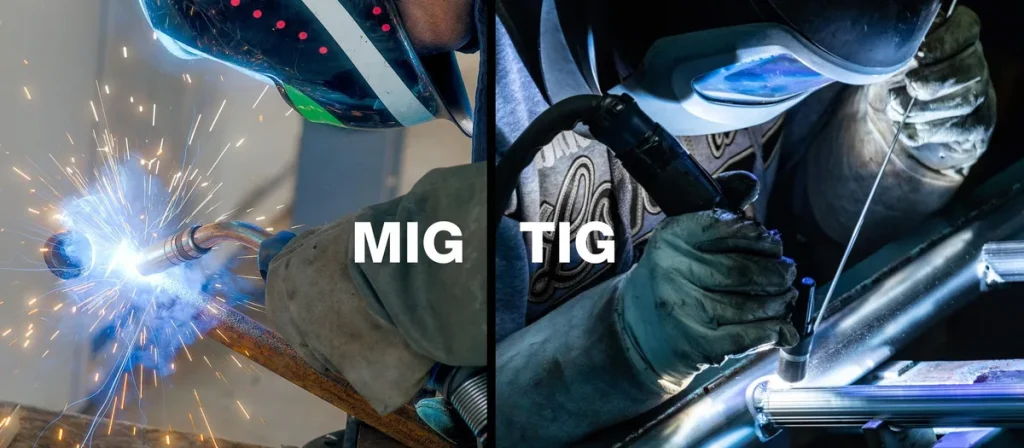
Understanding what the difference is between MIG and TIG welding is crucial when you're picking out equipment or tackling a new metal project. Both processes are workhorses in fabrication shops and garages, but they operate quite differently and yield distinct results.
Image source: Bing (Web (fair-use with source credit))
Our research indicates that while both are arc welding methods, their mechanisms for shielding the weld pool and adding filler material set them apart. This means one might be faster and more user-friendly for certain tasks, while the other offers unparalleled control for precision work, often achieving a superior aesthetic finish that adheres to standards like AWS D1.1 for structural welding.
MIG Welding: Speedy and Forgiving
MIG welding, officially known as Gas Metal Arc Welding (GMAW), is often the first arc welding process many people learn. It's celebrated for its speed and relative ease of use, making it a popular choice for a wide range of projects. At its core, MIG welding uses a continuously feeding wire electrode that melts and forms the weld bead.
How MIG Welding Works
In MIG welding, an electric arc forms between the continuously fed wire electrode and the workpiece. This arc melts both the wire and the base metal, creating a molten weld pool. As the wire feeds through a welding gun, a shielding gas (like Argon, CO2, or a mix) flows from the same gun to protect this molten puddle from atmospheric contamination, which could otherwise weaken the weld. This happens automatically, allowing the welder to focus on guiding the torch along the joint.
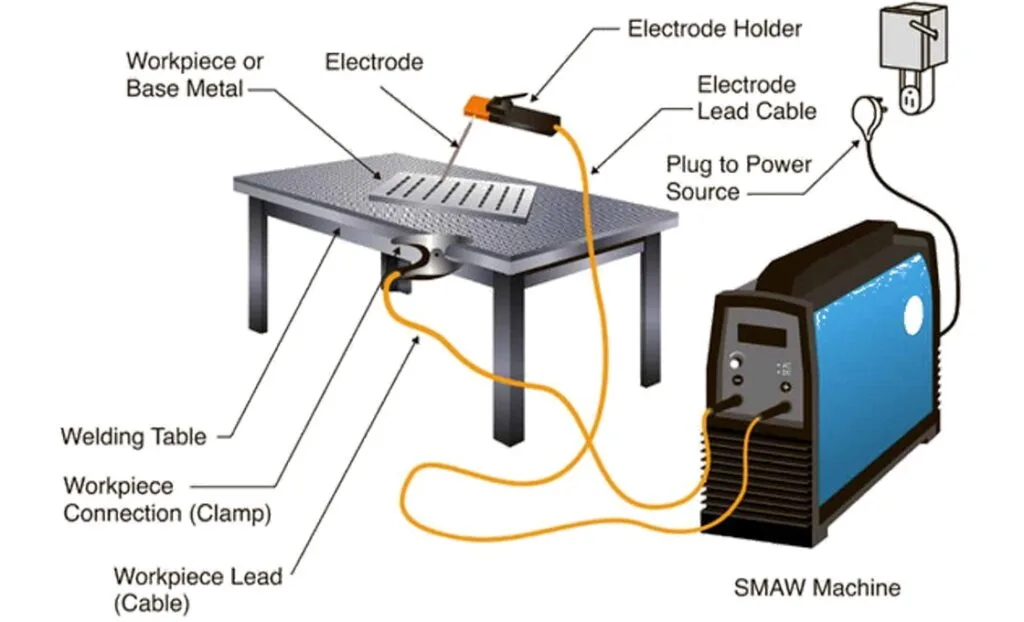
Image source: Bing (Web (fair-use with source credit))
This automated feeding of wire and gas makes MIG welding a high-deposition process. Manufacturer specifications often show MIG welders capable of depositing over 10 pounds of filler metal per hour on thicker materials. You can find more information on specific settings and wire feed speeds in guides like how to calculate wire feed speed in mig welding.
Key MIG Features & Benefits
The primary advantages of MIG welding stem from its design. The automatic wire feed means you don't need to stop and replace electrodes frequently, translating directly into faster project completion times. This makes it ideal for projects like building frames or performing automotive repairs. It's also generally considered more forgiving for beginners; you can often achieve decent welds with less practice compared to other methods.
Many common MIG welder settings can be found in resources like mig welder settings.
Common MIG Problems and How to Fix Them
Despite its user-friendliness, MIG welding isn't without its potential pitfalls. One of the most common issues is spatter, small droplets of molten metal that stick to the workpiece around the weld. This can occur if your settings are too high, your travel speed is too fast, or you're using the wrong gas for the material. Proper technique and correct machine settings, often detailed in resources like the lincoln welder settings chart, are key to minimizing this.
Another issue can be a lack of fusion if the heat isn't sufficient, leading to a weak bond, especially on thicker metals.
TIG Welding: Precision and Professional Finish
TIG welding, or Gas Tungsten Arc Welding (GTAW), is the process favored when precision, control, and a high-quality aesthetic finish are paramount. It's known for its ability to produce exceptionally clean and strong welds, making it the choice for critical applications where appearance and integrity matter most. Unlike MIG, TIG uses a non-consumable tungsten electrode to create the arc.
How TIG Welding Works
In TIG welding, a non-consumable tungsten electrode is held in one hand, and an arc is struck between this electrode and the workpiece. The heat from this arc melts the base metals and, if needed, a separate filler rod added by the welder's other hand. A shielding gas, typically pure Argon, flows from the TIG torch to protect the weld puddle and the tungsten electrode from oxidation. The welder precisely controls the arc's intensity with a foot pedal or a finger control on the torch.
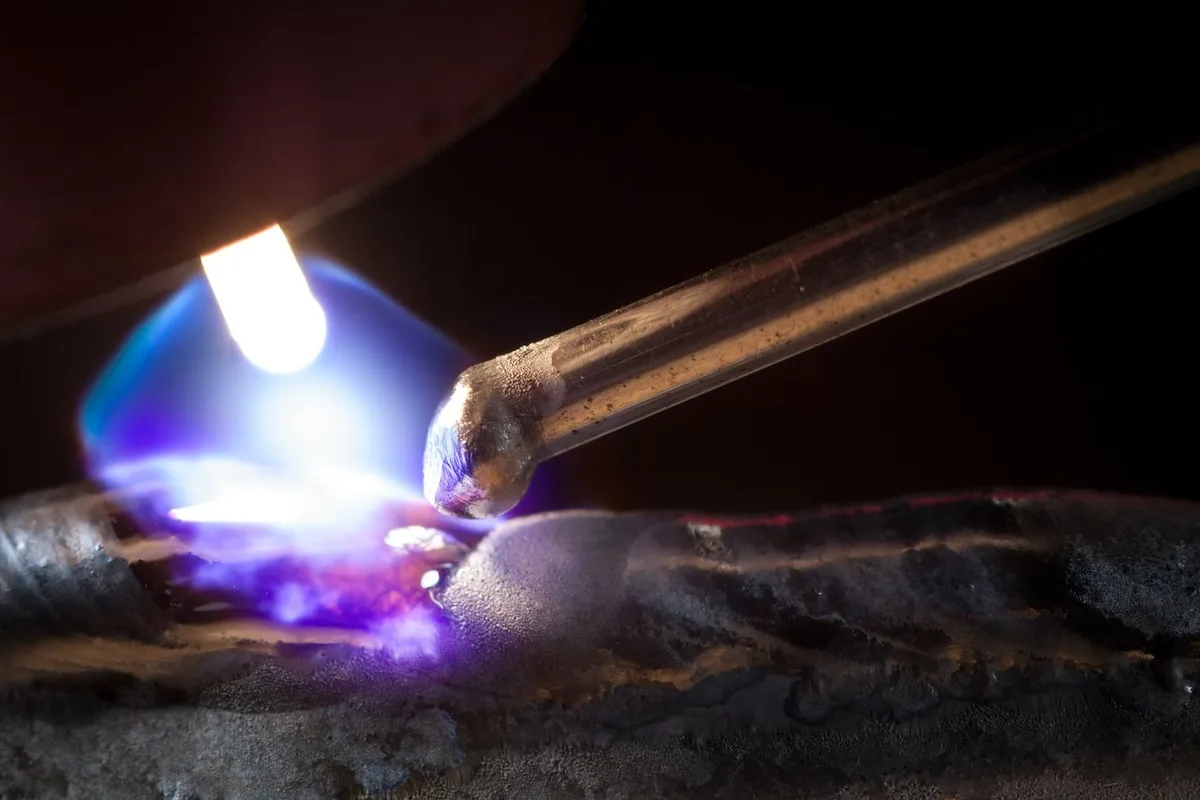
Image source: Bing (Web (fair-use with source credit))
This meticulous control allows for extremely precise heat input. When welding thin aluminum, a TIG welder can feather the pedal to maintain a perfect puddle without burning through, a feat that requires significant practice and skill. A great resource for understanding appropriate filler rods can be found in a tig welding filler rod selection chart.
Key TIG Features & Benefits
The main draw of TIG welding is the level of control it offers. Welders can manipulate the arc, the filler material, and the heat input with incredible finesse. This results in welds that are not only strong but also exceptionally clean and visually appealing, often described as looking like stacked dimes. This precision is invaluable when working with thin materials, exotic metals, or when aesthetics are a top priority.
TIG can also weld almost any metal, including steel, stainless steel, aluminum, copper, and titanium, though specific setups and techniques are required for each.
Common TIG Problems and How to Fix Them
The primary challenge with TIG welding is its steep learning curve. Mastering the coordination of both hands to control the electrode and filler rod, while simultaneously managing the heat with a pedal, takes considerable practice. Beginners often struggle with tungsten contamination, where the electrode touches the weld puddle, creating small inclusions and requiring the tungsten to be re-ground or replaced. Another common issue is porosity, which occurs when shielding gas is insufficient or disrupted, allowing atmospheric contaminants into the weld.
Proper gas flow and avoiding drafts are crucial, much like ensuring the right best gas regulator for home is in place.
MIG vs. TIG: The Direct Showdown
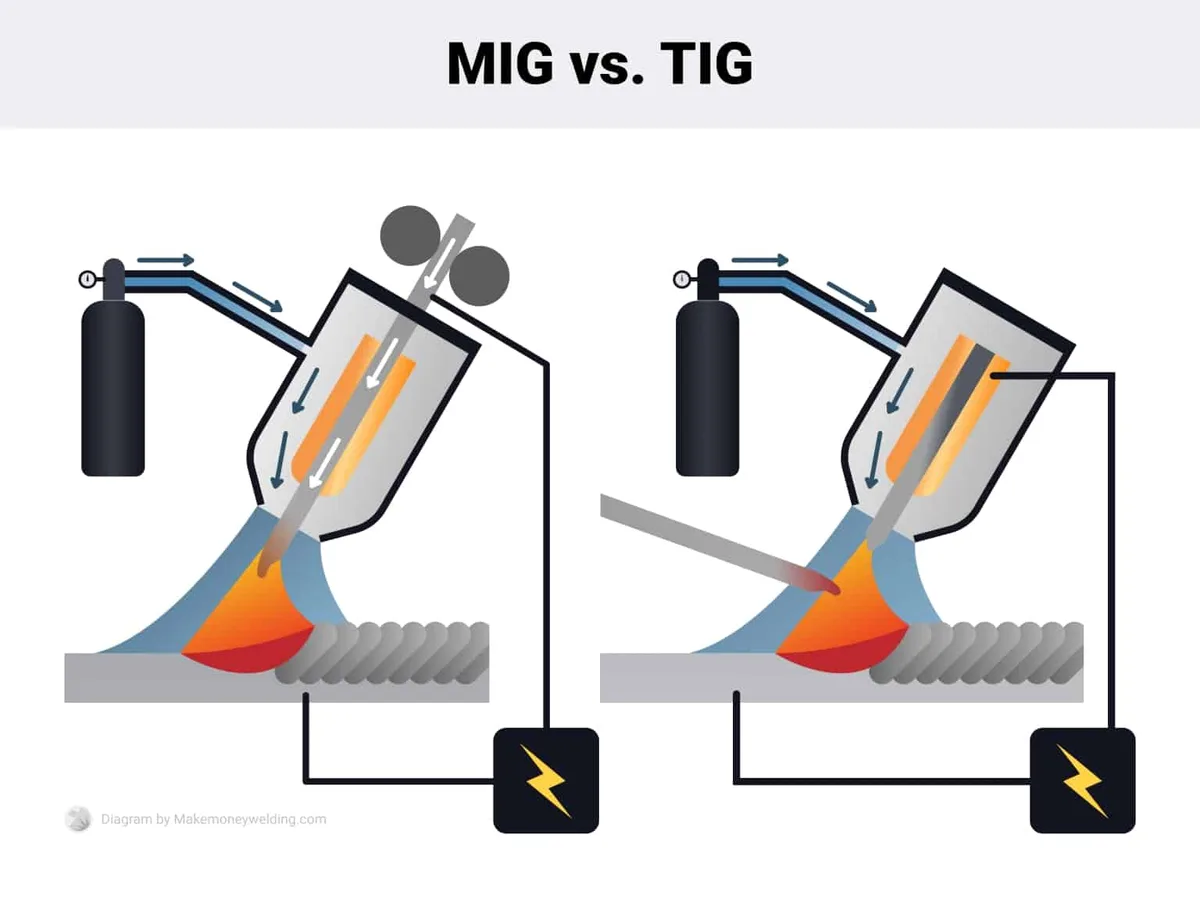
Image source: Bing (Web (fair-use with source credit))
When you're deciding between MIG and TIG, it boils down to what you're welding and what your priorities are. They both create strong joints, but their methods and typical outcomes are quite different.
When to Choose MIG: Best Use Cases
MIG welding shines when speed and efficiency are key. It's your go-to for thicker materials, from 16-gauge sheet metal up to half-inch steel or more. If you're building a robust trailer frame, fabricating exhaust systems, or working on automotive repairs where laying down a lot of weld quickly is important, MIG is usually the better choice. It's also excellent for structural fabrication where the slight imperfection of spatter isn't a concern and consistent, strong welds are needed.
For basic steel fabrication or if you're new to welding, MIG offers a faster path to making functional parts.
When to Choose TIG: Best Use Cases
TIG welding is the choice when quality of appearance and precision outweigh speed. It's unmatched for welding thin materials like thin-wall tubing or delicate sheet metal, where you need the absolute control to prevent burn-through. If you're fabricating components for high-end custom motorcycles, working on intricate stainless steel projects for kitchens, or welding aluminum parts where a smooth, clean bead is essential, TIG is likely your process. It's also the preferred method for exotic metals and situations demanding the highest weld integrity and aesthetic appeal, such as in aerospace components.


