Strength comparisons between MIG and TIG welding come up constantly — from hobbyists debating in forums to engineers selecting processes for structural work. The answer matters whether you’re building a roll cage, fabricating a bracket, or just trying to understand which process deserves your investment.
TIG welding generally produces stronger, higher-quality welds than MIG welding when performed correctly. TIG offers greater control over heat input, produces cleaner fusion with less spatter and porosity, and results in a narrower heat-affected zone. However, MIG welding can produce welds of equal structural strength on common steel applications when proper technique, correct wire, and appropriate shielding gas are used. The real-world strength difference often comes down to operator skill, material type, and joint preparation more than the process itself.
Why TIG Welds Tend to Come Out Stronger
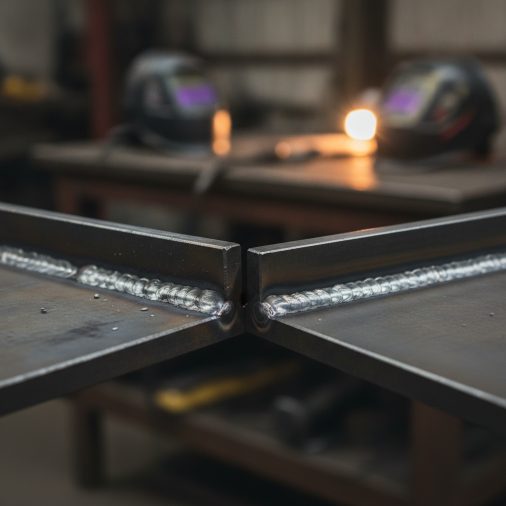
TIG welding uses a non-consumable tungsten electrode to create the arc, with filler rod fed separately by hand. This gives the welder independent control over arc heat and filler addition — two variables that significantly affect weld quality.
Because the welder controls each element separately, TIG produces:
– Tighter fusion with the base metal
– Lower porosity — fewer trapped gas pockets weakening the joint
– Narrower heat-affected zones (HAZ) — less base metal microstructure damage
– Cleaner bead profiles with consistent penetration
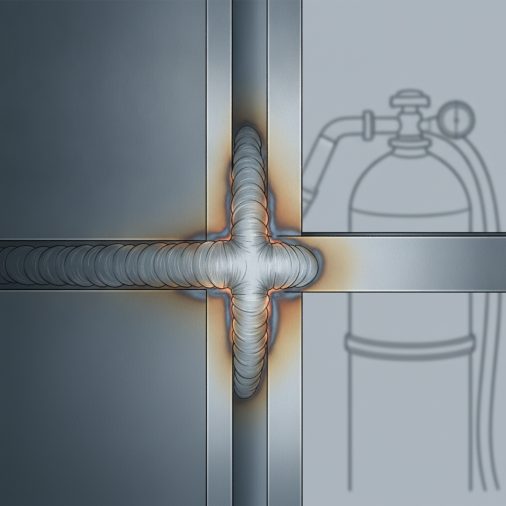
The heat-affected zone matters more than most beginners realize. A wide HAZ can reduce the mechanical strength of the surrounding base metal, even if the weld bead itself looks solid.
In practice, TIG welds on stainless steel, aluminum, and exotic alloys like chromoly or titanium consistently test closer to the base metal’s rated tensile strength. This is why aerospace, motorsport, and medical fabrication rely on TIG almost exclusively.
Where MIG Welding Holds Its Own
MIG welding isn’t weaker by nature — it’s faster, more forgiving, and entirely capable of producing structurally sound joints on the materials it handles best.
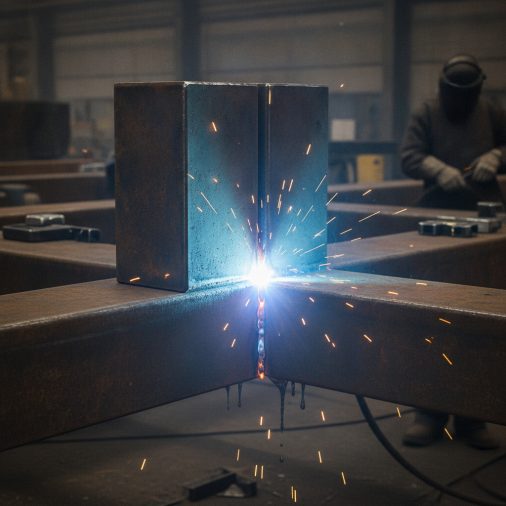
On mild steel, heavy plate, and structural work, a properly executed MIG weld can match TIG in tensile strength. The filler wire deposits continuously, which actually allows for faster buildup on thicker joints where pass count matters.
MIG also handles thicker material more efficiently. Multi-pass welds on structural steel — common in construction, trailer fabrication, and farm equipment repair — are almost always done with MIG or stick rather than TIG, and those welds carry serious load-bearing requirements.
For those wondering whether stick welding is stronger than MIG, the comparison follows similar logic — process alone doesn’t determine strength; execution and material match do.
The Variables That Actually Determine Weld Strength
Comparing MIG and TIG strength without controlling for other variables gives a misleading picture. These factors often matter more than the process chosen:
Factor
Impact on Strength
Joint preparation
Poor fit-up causes voids and incomplete fusion regardless of process
Filler metal selection
Mismatched filler lowers tensile strength and ductility
Shielding gas
Wrong gas mix increases porosity and oxide inclusions
Operator skill
Inconsistent travel speed or arc length weakens any weld
Heat input
Too much HAZ damage; too little means lack of fusion
Base metal cleanliness
Contamination causes porosity, cracking, and weak bonds
A well-executed MIG weld beats a sloppy TIG weld every time. Strength isn’t a function of the machine — it’s a function of the process being done correctly.
Material Type Changes the Equation
The material being welded heavily influences which process produces stronger results.
Mild steel: MIG and TIG perform comparably. MIG is faster and more practical for most structural steel work.
Stainless steel: TIG is significantly preferred. The precise heat control minimizes carbide precipitation and distortion. If you’re learning how to weld stainless steel at home, TIG is the better choice for clean, food-grade, or corrosion-critical applications.
Aluminum: Both processes work, but TIG produces more consistent quality on aluminum, especially thin sections. MIG aluminum welding requires a spool gun and proper gas — pure argon is standard, which is the same gas used for TIG.
Chromoly (4130/4140): TIG is the industry standard for chromoly tubing in roll cages and chassis fabrication. The controlled heat input reduces the risk of hydrogen cracking and HAZ brittleness. That said, welding chromoly with a MIG welder is possible with the right wire and technique.
Thin sheet metal: TIG handles thin material better because the welder can reduce amperage in real time. MIG on thin metal requires short-circuit transfer and precise voltage settings to avoid burn-through.
Speed vs. Precision: The Practical Trade-Off
TIG welding is slower. There’s no way around that. The process demands two hands — one holding the torch, one feeding filler — plus a foot pedal on most setups to control amperage.
MIG welding is significantly faster because the wire feeds automatically and the setup is simpler. For production environments, structural steel, and thick joints, MIG is the practical choice even if TIG would theoretically produce a slightly cleaner result.
A useful real-world example: exhaust fabrication. Whether exhaust welding uses TIG or MIG depends on the material and quality required. Stainless performance headers typically get TIG; mild steel cat-back repairs commonly get MIG.
Skill Gap Affects the Outcome More Than Process
This point gets overlooked in most comparisons. TIG welding has a significantly steeper learning curve. An intermediate MIG welder will consistently produce stronger joints than a beginner TIG welder, even on the same material.
TIG requires:
– Steady hand coordination between torch and filler
– Consistent arc length (typically 1/16 to 1/8 inch)
– Precise travel speed to maintain puddle consistency
– Foot pedal control to modulate heat through the weld
MIG is more forgiving of inconsistent technique, which is why it’s often recommended for beginners. The Lincoln Electric Weld-Pak 140 HD, for example, is a compact machine that beginners regularly use to produce structurally solid welds on mild steel without TIG-level training.
For a deeper look at the core differences between MIG and TIG welding, the process distinctions go well beyond just strength.
When TIG Strength Advantage Actually Matters
There are specific applications where the strength and quality advantage of TIG welding justifies the extra time and skill requirement:
– Aerospace components — where weld integrity must match material certifications
– Racing chassis and roll cages — chromoly tubing at critical nodes
– Pressure vessels and piping — welds subject to radiographic inspection
– Titanium fabrication — welding titanium with a MIG welder is generally not recommended due to contamination risk; TIG with proper shielding is the standard
– Thin-wall stainless tubing — where distortion and discoloration indicate heat damage
For general structural steel, farm equipment, trailer frames, and common fabrication, MIG is appropriate and strong enough. The TIG advantage becomes meaningful primarily in high-specification or precision-critical work.
FAQ
Is TIG welding stronger than MIG on the same material?
Generally yes, particularly on stainless steel, aluminum, and chromoly. TIG’s controlled heat input and lower porosity produce welds closer to the base metal’s rated tensile strength. On mild steel, the difference is often negligible when both are executed correctly. The skill of the welder matters as much as the process in most practical situations.
Can MIG welding be used for structural applications?
Yes. MIG welding is widely used in structural steel fabrication, including bridges, building frames, trailer construction, and heavy equipment. AWS D1.1 (Structural Welding Code for Steel) covers MIG welding procedures. Proper preparation, correct filler selection, and qualified procedures make MIG fully acceptable for load-bearing structural work.
Does TIG welding penetrate deeper than MIG?
Not necessarily. Penetration depends on amperage, travel speed, joint geometry, and base metal thickness — not the process alone. MIG using spray transfer at higher voltages can actually achieve deeper penetration on thicker steel than TIG at comparable heat settings. TIG’s advantage is control and consistency, not raw penetration depth.
Which weld is harder to pass a weld test with?
TIG weld tests are generally considered more demanding because the process requires greater manual skill, and the resulting bead quality is more visually inspectable. Both MIG and TIG welds undergo the same destructive and non-destructive test criteria (bend tests, tensile tests, X-ray), but TIG joints tend to show defects more clearly under inspection, making poor technique easier to identify.
Is TIG welding better for thin metal?
Yes, in most cases. TIG allows real-time amperage control via foot pedal, making it easier to manage heat on material under 1/8 inch thick without burning through. MIG can weld thin metal effectively — particularly with short-circuit transfer — but requires precise voltage and wire feed settings. You can read more about welding thin metal without burning through to understand the technique differences.
Does shielding gas affect MIG weld strength?
Yes, significantly. Using the wrong shielding gas increases porosity, reduces fusion, and creates oxide inclusions that weaken the joint. For mild steel MIG welding, 75% Argon / 25% CO2 (C25) is a common choice that balances penetration, spatter, and bead appearance. Pure CO2 increases penetration but creates more spatter. Gas selection is one of the variables most beginners underestimate.
Can a beginner produce stronger welds with MIG than TIG?
In most cases, yes. MIG’s semi-automatic wire feed and simpler setup allow beginners to achieve consistent fusion on mild steel relatively quickly. TIG demands more coordination and practice before reliable weld quality is achievable. For beginners working on structural mild steel projects, MIG is typically the better starting point for producing dependably strong joints.
The Bottom Line
TIG welding has a measurable strength and quality advantage on precision materials like stainless steel, aluminum, and chromoly — especially in applications where weld inspection standards are strict. MIG welding produces fully structural, strong welds on mild steel and handles thicker joints more efficiently.
Choosing between them based purely on strength often misses the real question, which is fit for purpose. A properly executed MIG weld on structural steel is entirely as strong as required. A poorly executed TIG weld on the same joint isn’t. Invest in technique, preparation, and correct consumables — and either process can produce welds that outlast the surrounding metal.